
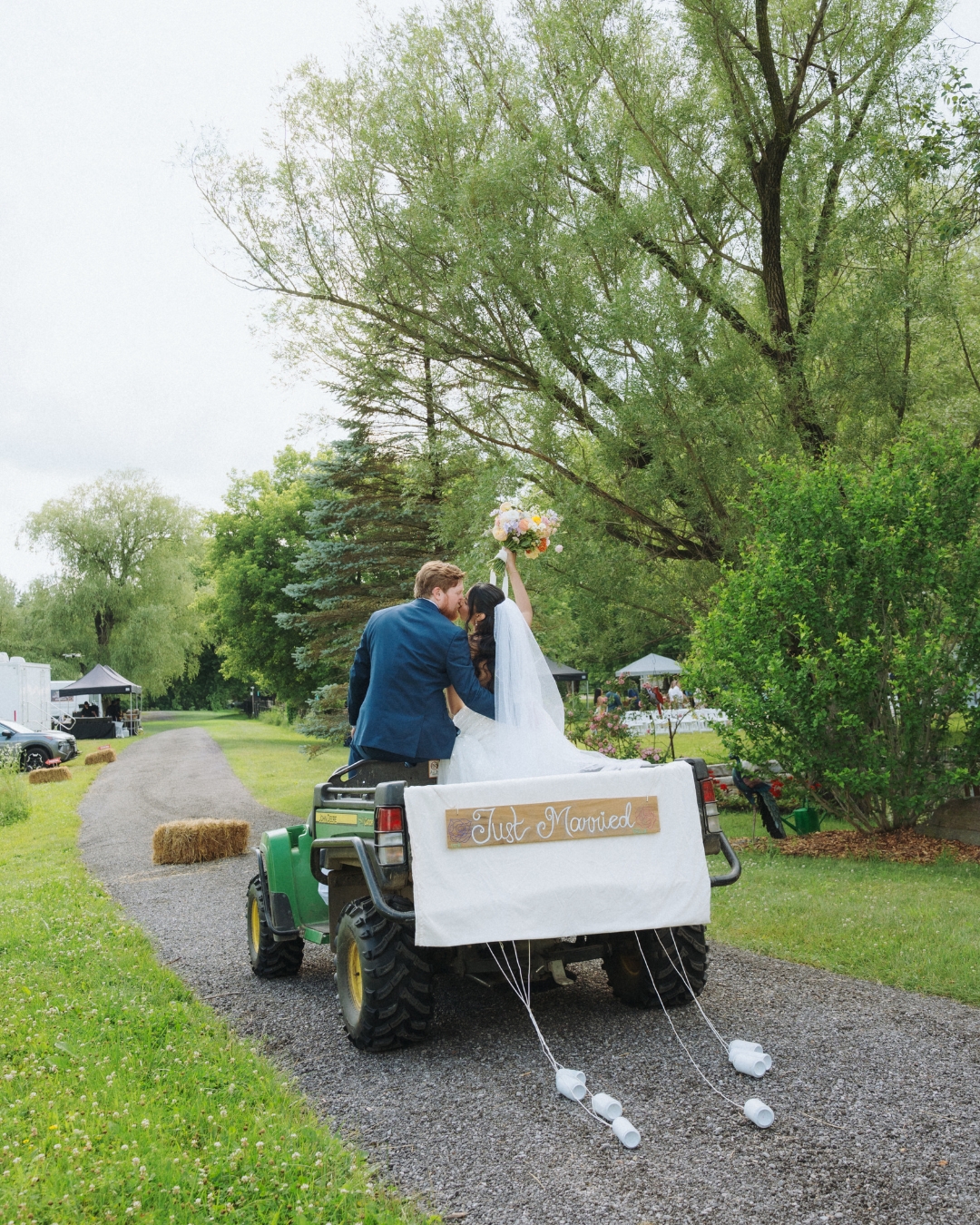
There’s a particular kind of couple
who come to us wanting a backyard wedding, and they usually know exactly why. Maybe it’s a childhood home. Maybe it’s a parents’ or grandparents’ property that’s meant something to the family for decades. Maybe it’s simply that a hotel ballroom feels impersonal next to the idea of getting married under a tree someone planted twenty years ago.
The appeal is real, and it’s not just aesthetic. A backyard wedding removes the feeling of being one of three events happening in a venue that same weekend. There’s no banquet manager rushing your timeline because another client has the space booked at 11pm. There’s no cookie-cutter floor plan. You get to shape the entire day around a place that already means something to you.
But here’s what we’ve learned after being on the ground for these weddings: a backyard is not a venue. It’s a piece of land that has to be temporarily turned into one, and that transformation involves dozens of decisions most couples don’t know they need to make until a few weeks before the wedding, when it’s considerably harder to fix them.
This isn’t meant to talk anyone out of a backyard wedding. Some of the most genuinely personal weddings we’ve worked on happened on private property. It’s meant to walk through what actually goes into making one work, so you’re making decisions with information instead of assumptions.
Start With the Property, Not the Pinterest Board
Before any conversation about florals or seating charts, someone needs to actually assess the property the way a venue coordinator would assess a ballroom. That means walking the space with a tape measure, not just a feeling.
How much of the yard is actually usable and flat? A property can look expansive and still have a huge portion of it be sloped, landscaped, or otherwise unusable for a tent, dance floor, or guest seating. Underground sprinkler systems, septic fields, and tree roots all affect where stakes can go and where heavy equipment can sit. A pool changes everything about layout, and not always in a way people expect. It’s not just about avoiding the water. It’s about the amount of space a pool eats up that couples had mentally counted as usable square footage.
We’ve walked properties where the couple’s mental picture of the layout simply didn’t match what the land could support once you accounted for a tent footprint, a prep tent for catering, a dance floor, guest seating, and walking paths between all of it. That’s not a small miscalculation. It’s the difference between a wedding that feels comfortable and one where guests are elbow to elbow by the bar.
Bathrooms Are Not Optional, and the House Bathroom Is Not the Plan
This is the one couples underestimate most consistently. A home’s two or three bathrooms were built for a family of four, not 80 to 150 guests over the course of six or seven hours.
Beyond the sheer number of people, there’s the practical issue of guest flow. Do you really want wedding guests walking through the house, past bedrooms and family photos, all evening? Most couples don’t, once they think it through. This is why luxury restroom trailers exist for private events, and why they need to be ordered early. Good trailer companies book up fast during wedding season, and they need level ground, access for delivery, and often a water and power hookup depending on the unit.
Electricity and Generators: The Thing Nobody Notices Until It Fails
A residential property is wired for a household, not a band, a full catering operation, string lighting, a photo booth, and a DJ booth all running at once. Overloading a home’s electrical panel is a real risk, and it’s the kind of thing that ends a reception in the dark if nobody planned for it in advance.
This is where generator rentals come in, and they need to be sized correctly by someone who actually knows the power draw of the vendors involved. A caterer running warming equipment and a DJ running a full sound system are drawing very different amounts of power, and both need to be accounted for. It’s also worth knowing where the generator will physically sit, because they’re loud, and nobody wants one humming behind the head table.
Weather Is Not a “What If.” It’s a Plan.
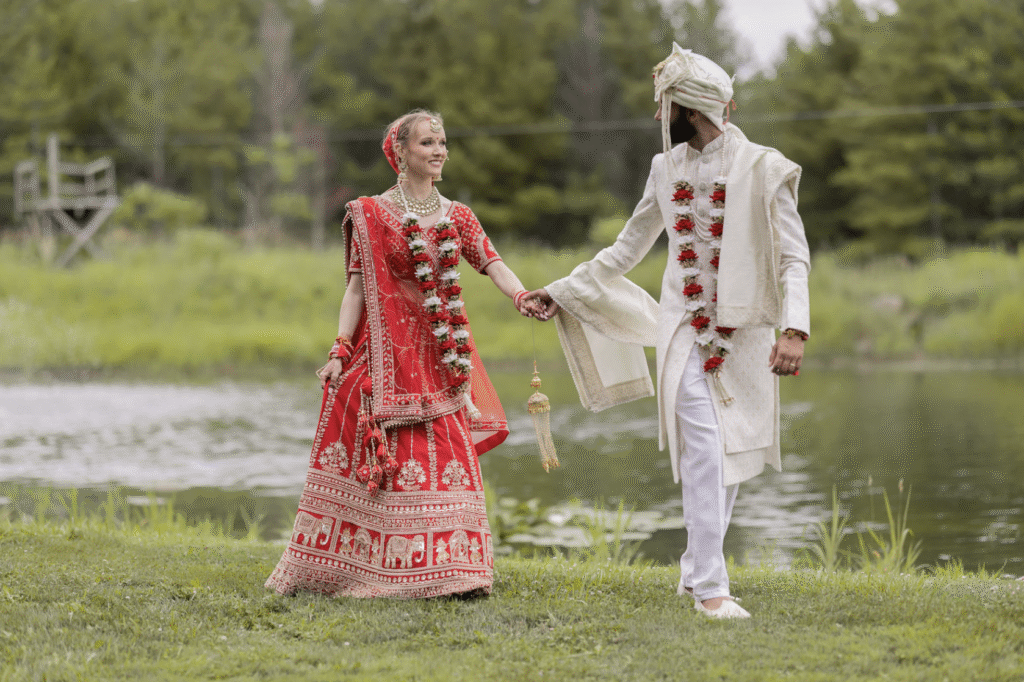
Every outdoor wedding needs a rain plan that is a real plan, not a vague idea that “we’ll figure it out.” A tent isn’t a backup plan. A tent is usually the plan, with sidewalls that can go up or down depending on weather.
The couples who feel calm on their wedding day are usually the ones who decided on their rain contingency weeks in advance, not the morning of. That means knowing exactly what happens to the ceremony space, the cocktail hour, and the reception if it rains, and making sure every vendor involved knows the same plan. A florist who was told about a ceremony arch outdoors needs to know if it might move under a tent instead.
Tents, Flooring, Heating, Cooling, and Lighting
A tent solves the weather problem, but it introduces a handful of new ones. Tents need permits in some municipalities depending on size, and they need a certain amount of clearance from structures, property lines, and overhead branches or wires. This varies by municipality across the GTA, so it’s worth checking with your local city or town before booking one, particularly for larger structures.
Flooring matters more than couples expect, especially over grass. A rainy week beforehand can turn a lawn into something that isn’t stable for a dance floor or for guests in heels. Heating and cooling depend on the season and the time of day the ceremony and reception happen. An evening in late September in the GTA can get cold fast once the sun goes down, and a tent without heating can make for a miserable last two hours of a reception that started out lovely.
Lighting is both aesthetic and functional. String lights look wonderful in photos, but a property also needs enough functional lighting for guests to walk safely, for the catering team to work, and for pathways, parking areas, and bathrooms to be visible after dark.
Catering Needs a Real Kitchen, or a Plan That Replaces One
Most home kitchens were not built to prepare a plated dinner for 120 people. Even buffet-style catering usually requires warming equipment, prep space, and enough room for a catering team to move without being in each other’s way.
This is why caterers for backyard weddings often bring in their own prep tent, and why that tent needs its own spot in the site layout, close enough to the reception space to be functional but out of guests’ sightlines. It’s worth asking any caterer early what kind of setup they need on-site, because “we’ll figure it out when we get there” is not something you want happening on the actual wedding day.
Parking Looks Fine Until Every Vendor Arrives at Once
This is one of those things that sounds minor and turns into a real problem. A driveway that comfortably fits four cars looks completely different once the caterer’s van, the rental delivery truck, the florist’s vehicle, the DJ’s equipment van, and the photographer all need access within the same two-hour window.
Street parking has its own considerations too, particularly on residential streets where neighbours also need access to their own driveways. For guest parking, many backyard weddings end up using valet services or offsite parking with shuttles, especially if the property is in an area with limited street parking. This needs to be figured out and communicated on the invitation or wedding website well before the day, not left for guests to sort out when they arrive.
Vendor Loading and Setup Access
Related to parking, but distinct from it: every vendor needs a clear path to get equipment into the space they’re setting up. Rental companies delivering tables, chairs, and a tent need a path wide enough for dollies and often a truck that can get close to the setup area. If that path runs through a side gate, is the gate wide enough? If it runs across the lawn, will that same lawn need to look pristine again in six hours for the ceremony?
We’ve seen properties where the only access to the backyard was a narrow side path between two houses, which meant every single item, every table, every chair, every piece of tent structure, had to be carried through by hand. That’s not a dealbreaker, but it is something that needs to be known in advance so vendors can plan their timeline and staffing around it.
Noise and Consideration for Neighbours
A backyard wedding is happening on a residential street, which means neighbours are part of the equation whether they’re invited or not. The City of Toronto’s noise bylaw, for example, sets limits on amplified sound and restricts certain noise later in the evening, and other municipalities across the GTA have their own versions of these rules. They vary by city and township, so it’s worth checking directly with your local municipality about what applies to your property and your timeline.
Beyond the legal side, there’s a practical courtesy piece. A heads-up note to neighbours ahead of time, letting them know there’s a wedding happening and roughly what time the music will wrap up, tends to go a long way. People are far more forgiving of a loud Saturday night when they’ve been told about it in advance instead of finding out from the noise.
Permits and Property Restrictions
Depending on the municipality, guest count, and whether you’re renting a tent above a certain size, some backyard weddings require permits. Some properties also come with their own restrictions, particularly if they’re part of a homeowners’ association, a conservation area, or a heritage property. None of this is standard across the GTA, which is exactly why it’s worth a direct call to your municipality or property management company early in planning rather than assuming a backyard wedding is automatically exempt from any oversight.
Guest Flow and Accessibility
Grass, gravel, and uneven ground are difficult for guests using wheelchairs, walkers, or even just heels. A realistic site plan accounts for how older guests or guests with mobility needs will move from parking to ceremony to reception, and whether there’s a path that doesn’t require crossing a lawn that’s turned soft after a week of rain.
Photography and Getting-Ready Spaces
Where is everyone actually getting ready? A home with two small bedrooms is a very different getting-ready situation than one with a primary suite that can hold a full bridal party plus a photographer, a makeup artist, and good natural light. This needs to be scouted the same way the reception space is, because photographers need to know in advance what they’re working with, not discover it that morning.
Vendor Arrival Schedules
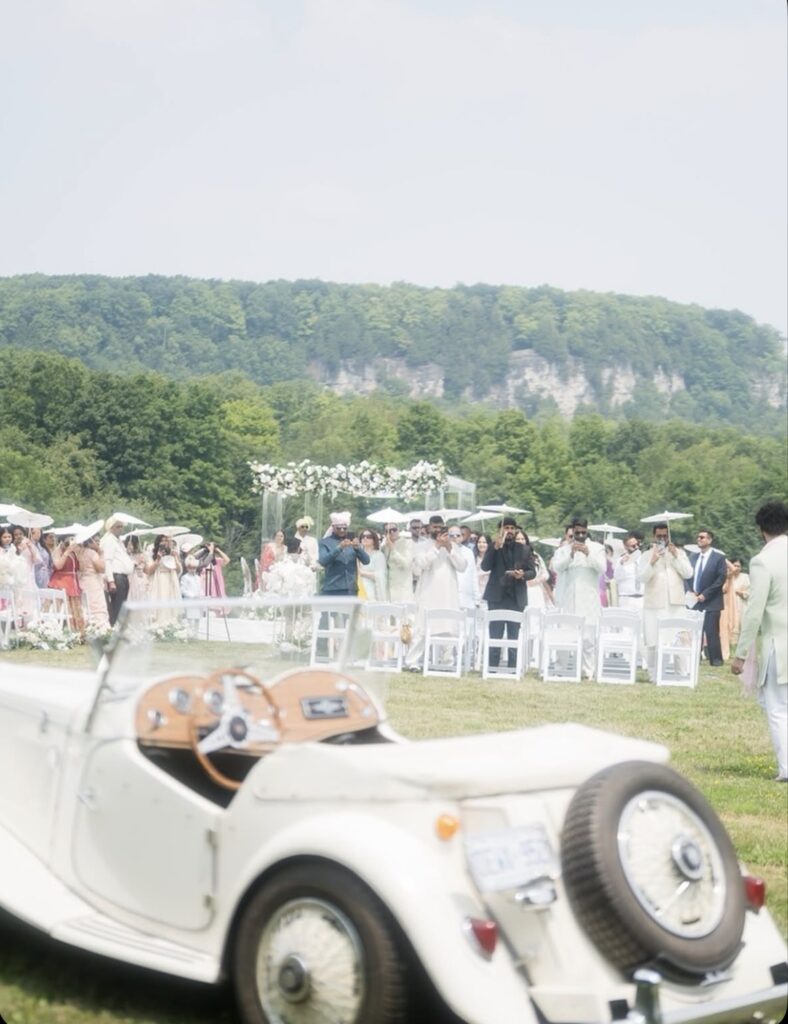
A backyard wedding usually involves more vendors arriving over a longer window than a traditional venue, where a lot of setup is handled by in-house staff. Rental deliveries, tent installation, catering setup, florals, and the band or DJ all need staggered arrival times that don’t create a bottleneck at the one driveway or side gate everyone has to share.
Setup and Teardown Take Longer Than People Expect
At a traditional venue, setup and teardown are the venue’s problem. At a private property, they’re the couple’s problem, or their planner’s. Depending on the size of the wedding, setup can start the day before, and teardown can run late into the night or require a next-morning pickup, which means someone needs to be responsible for the property being cleared, locked, and left in good shape.
Garbage, Rentals, and End-of-Night Cleanup
Where does the garbage actually go during the event? A backyard doesn’t have the loading dock and waste management system a venue has, so this needs an actual plan, including who’s responsible for getting rental items packed up correctly so nothing gets billed back for damage or missing pieces.
Who Is Actually Managing All of This on the Day
This is the piece that ties everything above together. Somebody has to be the person who knows the rain plan, coordinates the caterer’s arrival with the rental delivery, handles the moment a neighbour comes to the gate at 9:45pm, and makes the call if the generator trips. That person cannot be the mother of the bride, and it cannot be the couple.
This is really the difference between a backyard wedding that feels personal and relaxed, and one where the hosts spend their own wedding day fielding logistics instead of being part of it.
What a Planner Actually Does on a Private Property
The word “planner” makes people think of aesthetics, and that’s a fair assumption given how the role usually gets portrayed. On a backyard wedding, the aesthetic part is often the smallest piece of the job.
What a planner mostly provides on private property is infrastructure. A venue comes with staff who already know where the power is, which door the caterer loads through, how long the room takes to flip, and what happens when it rains. A backyard comes with none of that. Someone has to build that knowledge from scratch for a property that has never hosted a wedding, and then hand it to eight or ten vendors who have never worked it before.
The Site Plan Everyone Works From
Most of the work happens months before anyone sees a flower. It starts with a site visit where someone measures the yard, locates the electrical panel, checks whether the side gate is wide enough for a rental dolly, and figures out where a generator can sit without being audible from the dinner tables.
That visit produces a scaled site plan, and that plan becomes the single document every vendor works from. It matters more than it sounds. Without one, each vendor arrives with their own mental picture of where they’re setting up, and those pictures almost never match. The tent company assumed the ceremony was on the upper lawn. The caterer assumed the prep tent went where the DJ is now loading in. Both are reasonable assumptions, and both were made in isolation, which is the actual problem.
A good site plan also forces the hard conversations early. If the layout only supports 90 guests comfortably and the list is at 130, that’s a conversation worth having in February rather than discovering in August when the chairs are already ordered.
Vendor Coordination, Which Is Bigger Than It Sounds
On a private property, vendor coordination is a real logistical exercise rather than a few emails. It means a staggered load-in schedule so the rental truck, the tent crew, the caterer, and the florist aren’t competing for the same driveway in the same hour. It means every vendor knowing the same rain plan, in the same words, weeks ahead of time. It means one point of contact so the caterer isn’t calling the couple at 2pm on the wedding day asking where to park.
It also means being the person who reads the contracts properly. Tent quotes that don’t include flooring. Restroom trailers that need a power source nobody has budgeted a generator for. Rental orders that cover chairs for dinner but not for the ceremony, because those are two different counts and the couple only gave one. These aren’t dramatic catches. They’re the kind of thing you only think to check after you’ve watched each one go wrong.
Timeline Building, Backwards From Sunset
Backyard weddings have more timeline pressure than couples expect, because so much of the day depends on light and on setup windows that can’t be compressed.
A planner builds the schedule backwards from a few fixed points. Sunset determines when portraits have to happen. The noise bylaw or the neighbours’ goodwill determines when music ends, which determines when the last dance is, which determines when speeches have to wrap. Catering’s prep window determines when their team arrives, which determines when the rental delivery has to be finished and out of the driveway. Pull one of those threads and the rest move.
The version of this that goes wrong is the timeline that was built forward from the ceremony time and never checked against any of those constraints. It looks fine on paper in March. It falls apart at 6:40pm in September when the photographer realises there are twelve minutes of usable light left and the family photos haven’t started.
Being the Buffer
There’s a category of value here that’s difficult to put in a proposal because it’s mostly invisible when it’s working.
Weddings on private property generate more small decisions than venue weddings do, simply because there’s no established system absorbing them. Someone has to decide whether to drop the tent sidewalls when the wind picks up. Someone has to redirect the delivery driver blocking the neighbour’s driveway. Someone has to deal with the rental company sending 110 chairs instead of 120, and do it quietly, and solve it before anyone notices.
Those decisions get made either way. The only question is whether the couple is the one making them, in a dress or a suit, forty minutes before walking down the aisle.
The same applies to the people around the couple. Backyard weddings have a way of conscripting family members into unpaid labour, and it usually happens by default rather than by choice. The aunt who ends up directing parking. The best man who spends cocktail hour hunting for an extension cord. The mother of the bride who is technically the host and is therefore the one every vendor approaches with a question. Most of those people would rather be at the wedding. Having a planner on site is often as much for them as it is for the couple.
Knowing What This Property Can’t Do
The most useful thing an experienced planner brings is a realistic read on the property itself, including the parts that don’t work.
Some yards can’t support the wedding the couple has in mind, and it’s better to know that at the start. Maybe the only access is a narrow side path, which means every table and chair is carried in by hand and the labour cost doubles. Maybe the ground doesn’t drain and a rainy week makes half the lawn unusable. Maybe the neighbours are close enough that an amplified band is going to be a genuine problem regardless of what the bylaw technically permits.
None of those necessarily kill the plan. They just change it, and the change is far easier to absorb in early planning than in the last month.
Full Planning Versus Coordination
Not every backyard wedding needs a full-service planner from the engagement onward.
Plenty of couples plan the whole thing themselves and bring in a coordinator closer to the date, typically six to eight weeks out, to build the timeline, take over vendor communication, confirm every contract, and run the day itself. That tends to be the right fit for couples who are organised and genuinely enjoy the planning, but don’t want to be the operations manager at their own wedding.
Full planning makes more sense when the property has real complications, when the guest count is large enough that the logistics multiply, or when the couple simply doesn’t have the hours. Either way, the part that shouldn’t be skipped is having someone other than the couple running the day. That’s the piece that determines whether you attend your own wedding or work it.

Leave a Reply